Triage · Position · Documentation

A shared picture. When every moment matters.

TriPoD is a Swedish project developing digital tools to enable real-time information sharing across healthcare command structures during mass-casualty incidents. The aim is to strengthen collaboration between the organisations involved, establish a shared operational picture and help healthcare command teams at different levels lead the response, coordinate care and allocate resources.

Talk to the teamExplore the project

Critical information. Connected teams.

When many injured people need emergency care at the same time, a shared operational picture is essential for assessing care needs and available resources, and for directing and coordinating healthcare resources.

TriPoD brings together each patient’s triage category (colour code), location and documentation in a shared digital tool. The information follows the patient from the incident scene to a healthcare facility and throughout hospital care, enabling continuous information sharing and supporting effective decision-making, coordination and resource allocation during major incidents.

  • Triage

    Share each patient’s triage category (colour code) as the situation changes.

  • Position

    See where patients are and follow their movement through the care chain.

  • Documentation

    Keep patient information connected through a unique tag ID.

The project is built on user-centred development and continuous evaluation of prototypes with healthcare professionals in simulated major incidents.

From patient to shared overview.

An electronic triage tag, a mobile app and a web portal connect teams at the scene with those coordinating the response.

  1. Assess

    Examine and triage the patient as usual.

  2. Tag

    Attach a TriPoD e-Triage Tag to the patient’s arm and select the colour for their triage priority.

  3. Scan

    Scan the tag with the TriPoD mobile app.

  4. Monitor

    The patient’s triage status and location are shared with operations.

Connected tools. A shared picture.

From the e-Triage Tag on a patient’s arm to the overview available to healthcare command teams, each part of TriPoD helps teams keep information connected.

Electronic Triage Tag

A visible priority. A unique patient ID.

Attach the e-Triage Tag to the patient’s arm and select the colour for their triage priority. The colour stays visible without a phone, giving responders an immediate overview at the scene.

If the patient needs to be reassessed, the priority can be changed manually. The unique tag ID keeps their information connected as care continues.

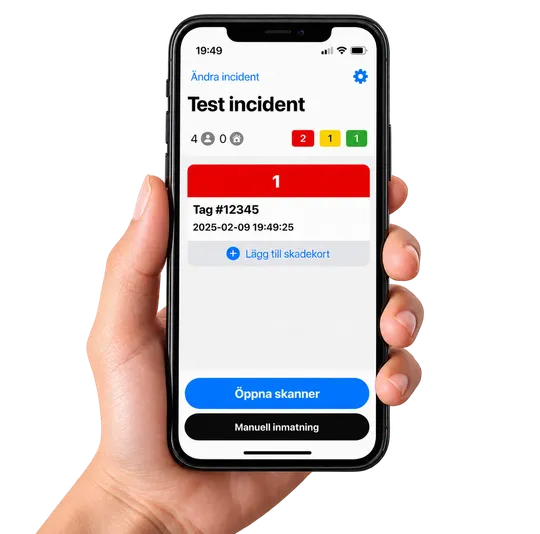
A hand holding a phone with the TriPoD app showing a test incident, tag ID and triage priority.

Mobile App

Scan at the scene. Share with the team.

Scan an e-Triage Tag to connect the patient’s triage status and location with the wider response. The app links information recorded at the scene to the TriPoD cloud.

When connectivity drops, data is stored on the device and uploaded once the connection returns.

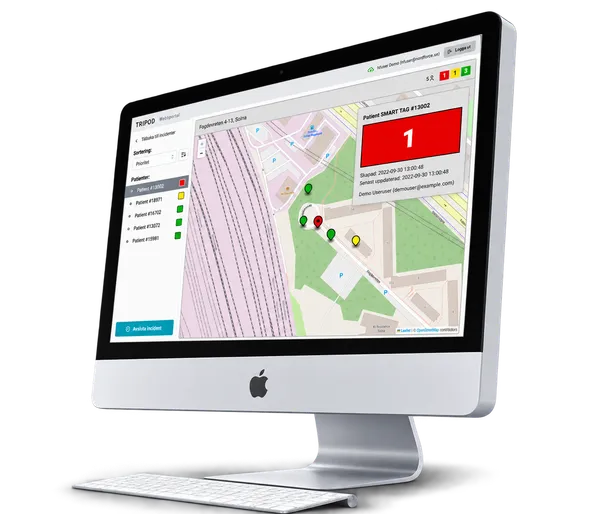
A desktop monitor displaying the TriPoD web portal with a map, patient list and colour-coded triage priorities.

Web-based platform

See the response as it unfolds.

Follow incoming patient information, triage priorities and locations in one shared overview. Operations can use the map and patient list to support coordination as the incident develops. The shared view reduces the need to compile incoming reports manually and makes it easier to get a quick overview.

The platform runs in a standard web browser on a desktop, laptop or tablet. Access is limited to authorised users with the appropriate permissions.

Companion Bluetooth Scanner

Quick to scan. Hands free between patients.

A dedicated Bluetooth scanner complements the mobile app, offering a companion tool for scanning e-Triage Tags in the field.

Worn on the belt with a retractable lanyard, the scanner is always within reach. Pull it forward, scan the tag and release it — the lanyard retracts, returning the scanner to your waist.

Designed for rapid registration by priority colour, it helps responders quickly add injured patients to the system without holding a phone. The scanner stays close at hand between scans, leaving both hands free for patient care.

Tested in exercises. Refined with users.

Exercises with ambulance services, hospitals and command posts help us understand how TriPoD works for the people using it. Their feedback shapes each new iteration. The aim is to make information sharing faster and smoother in everyday use.

  1. Develop
  2. Test
  3. Learn
  4. Improve
  5. Re-test
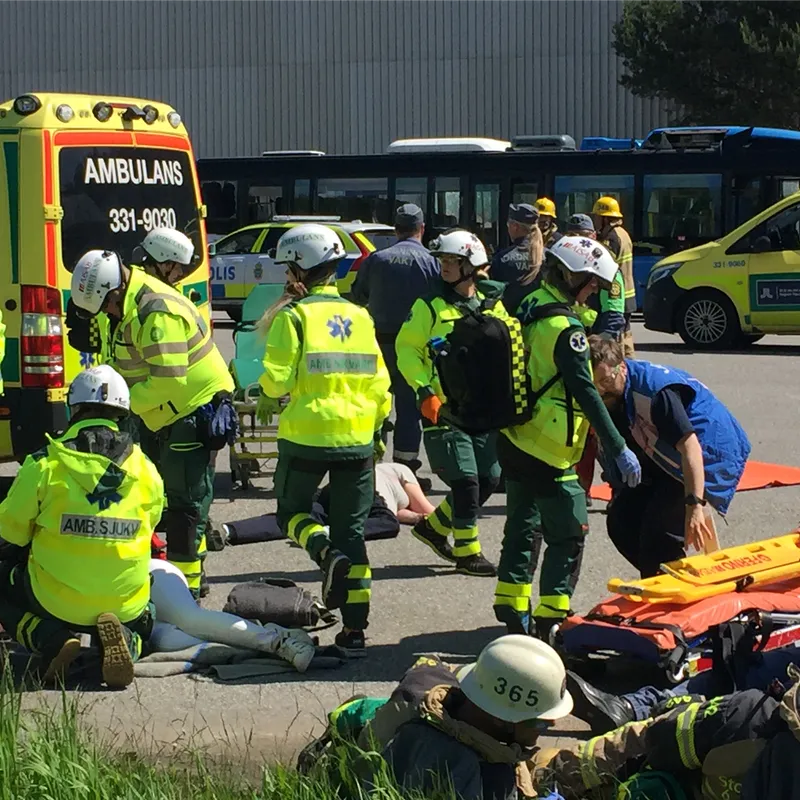
Ambulance personnel and other emergency responders work together at an incident scene.

The project journey

  1. 2023

    Digital triage tag testing with Region Stockholm Ambulance Services.

  2. 2023–2024

    Exercises and evaluation with Capio S:t Göran’s Hospital, prehospital emergency care and regional healthcare incident command and ambulance services in Stockholm.

  3. 2024

    Testing in a regional crisis preparedness exercise in Stockholm and a demonstration at the national PS instructor meeting in Kolmården in December.

  4. 2025

    Evaluation during a multi-agency exercise on responding to ongoing lethal violence in Norrköping, and presentations at PICTA Forum (Prehospital Innovation Collaboration Hub) in Gothenburg in April and WADEM (World Association for Disaster and Emergency Medicine) in Tokyo in May.

Built around the people who use it.

Our multidisciplinary team brings together ambulance and emergency care, disaster medicine research and technology development. Healthcare needs and existing workflows guide the design.

  • Healthcare

    Professionals and intended users shape the tools through workshops, exercises and hands-on testing.

    Capio S:t Göran’s Hospital and Samariten Ambulans contribute clinical expertise and practical experience.

  • Research

    Researchers in prehospital emergency care and disaster medicine guide systematic evaluation.

    Umeå University contributes research expertise.

  • Technology

    Healthcare technology experts and consultants contribute expertise and development resources to turn healthcare needs into practical digital tools.

    Nordforce Technology and 7LAB contribute technology development.

Meet the team

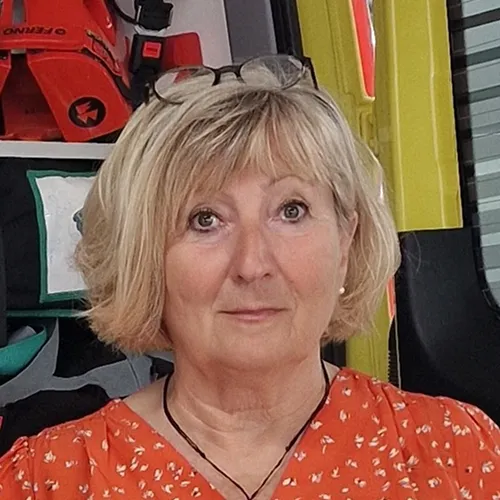
  • Portrait of Monica Rådestad

    Monica Rådestad

    Keeping end users at the heart of the project.

    A specialist nurse with a background in anaesthetic nursing and experience as a healthcare educator in the Swedish Armed Forces. She has extensive experience in emergency care, crisis and disaster medical preparedness, and the development of civil defence within healthcare.

    Monica is an Associate Professor of Disaster Medicine at Karolinska Institutet, with research focused on the initial healthcare response to major incidents.

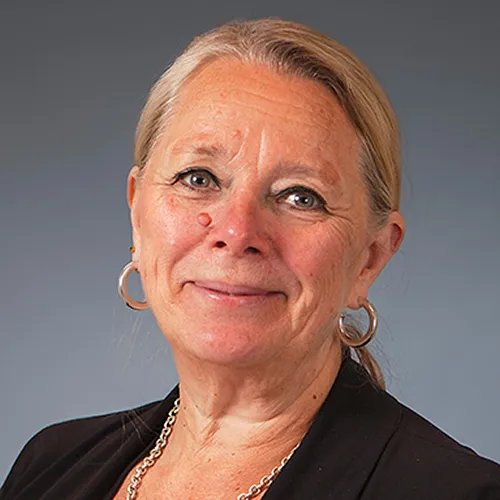
  • Portrait of Veronica Lindström

    Veronica Lindström

    Turning fresh perspectives into the next good idea.

    Professor of Nursing specialising in prehospital emergency care at Umeå University. Her research focuses on prehospital emergency care, organisation, decision-making and the development of evidence-based ambulance care.

    Veronica has extensive experience in developing clinically integrated research and collaboration between universities and ambulance services. Through national and international collaborations, she has helped strengthen ambulance care as a field of knowledge.

  • Portrait of Torkel Kanfjäll

    Torkel Kanfjäll

    Asking the questions that make the next version better.

    A specialist nurse in anaesthetic and ambulance care with over 35 years of experience in prehospital services. As Head of Care at Samariten Ambulans AB, he works on service development, quality improvement and the development of prehospital working practices.

    He has also spent many years developing triage models, digital command systems and training in prehospital care, as well as defining requirements for and procuring prehospital patient record systems.

  • Portrait of Ulf Bergqvist

    Ulf Bergqvist

    Helping the pieces click into place.

    Technical coordinator for the TriPoD project, responsible for system architecture, integration and technical development. He has extensive experience in digitalisation projects in the healthcare sector and broad expertise in electronics, mechanics and software development.

    Ulf works to turn technology into solutions that deliver practical value and improve efficiency in healthcare.

  • Portrait of Oscar Bergström

    Oscar Bergström

    Turning ideas into solutions.

    A developer with broad expertise in web development, mobile applications, embedded systems and hardware development. He has extensive experience in digitalisation projects and development closely linked to research in the healthcare sector.

    Oscar contributed to the proof of concept on which TriPoD is based and works to turn technology into user-centred solutions.

With thanks

To Capio S:t Göran’s Hospital and the ambulance services in Stockholm and Norrköping for making field exercises possible and sharing their expertise.

Interested in a demonstration?

Get in touch to discuss the project, our research or opportunities to collaborate.

Email the teaminfo@tripod.nu